Have you felt the atmosphere at your yard change lately? Maybe the usual morning chatter has been replaced by hushed conversations about the price of hay, or perhaps you’ve received a sudden text message from your yard manager that made your heart sink. If things feel a bit more "legal" and a lot less "leisurely" right now, you aren’t alone.
Recent data from the County Courts has revealed a startling trend: legal disputes within livery yards have spiked by 18% over the last year. From unpaid bills to abrupt evictions, the equestrian world is currently navigating a "perfect storm" of rising costs and outdated agreements.
At The Horse Lawyer®, we’re seeing more and more clients: both horse owners and yard managers: caught in the crossfire. The common thread? A reliance on "the way we’ve always done it" rather than clear, written protection.
So, why is this happening now, and more importantly, is your current arrangement a ticking time bomb?
The Perfect Storm: Feed, Staff, and Fees
It’s no secret that the cost of living has hit our four-legged friends just as hard as it’s hit us. If you’re a yard owner, you’re likely watching the price of hay, bedding, and hard feed climb month after month. Then there’s the staffing crisis. Finding and keeping good grooms means paying competitive wages, which have risen significantly to keep pace with inflation and minimum wage requirements.
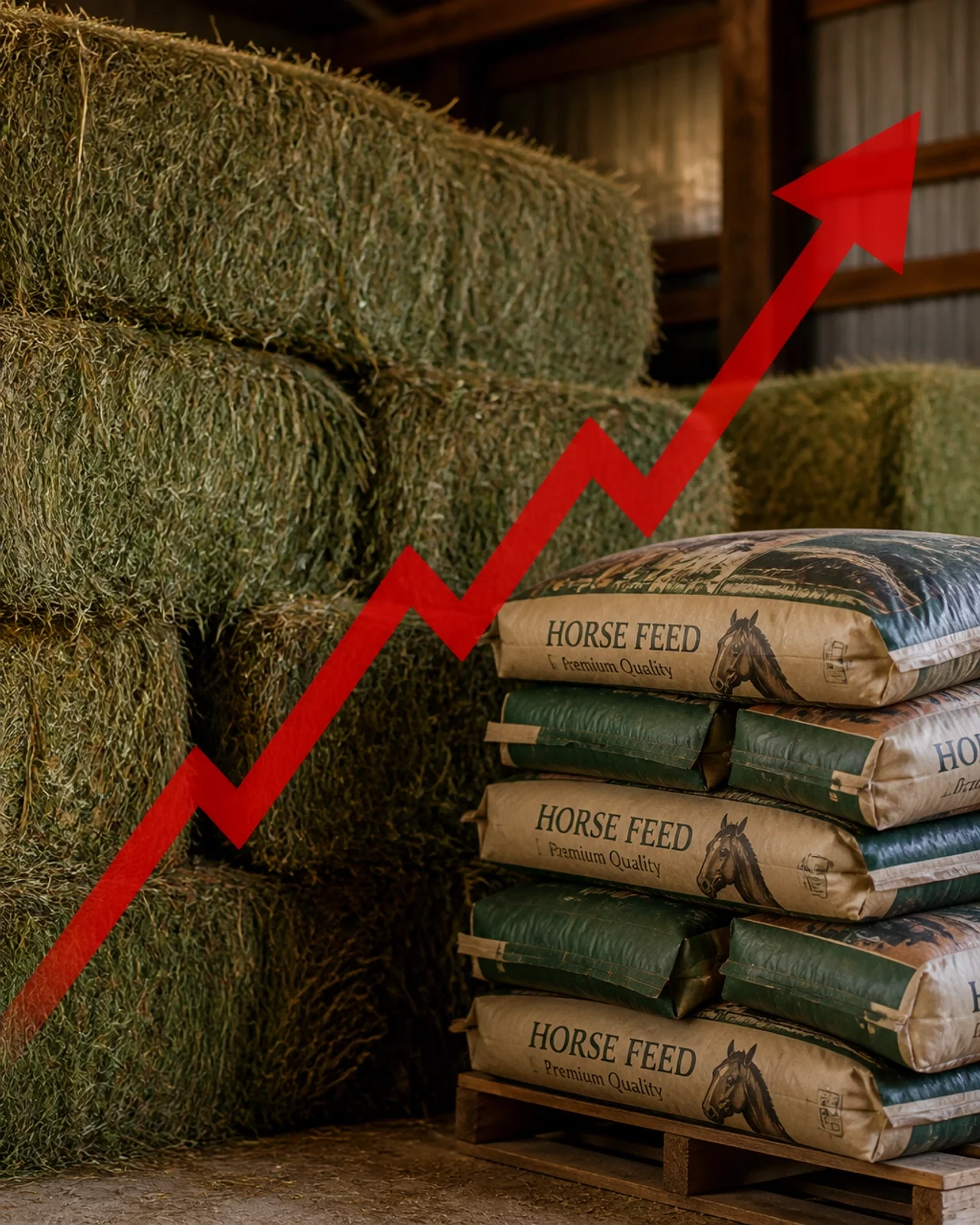
When costs go up by 20% or 30% for the yard, that money has to come from somewhere. This has led to many yard owners implementing sudden, steep price hikes. We’ve heard of cases where owners were told their livery was increasing by 40% with only two weeks' notice.
For the horse owner, this is a massive shock to the system. For the yard owner, it’s a matter of survival. Without a written contract that outlines exactly how and when prices can be increased, this friction quickly turns into a legal battle.
Why Handshakes are Hurting You (The Verbal Trap)
We get it: the horse world is built on trust. Many of the best livery arrangements started with a simple chat over a stable door and a handshake. It feels more "equestrian" and less "corporate," doesn't it?
But here’s the reality: a verbal agreement is only as good as the memory of the person you’re arguing with.
When money gets tight, "trust" is often the first thing to go out the window. Without a written document, how do you prove what was actually agreed upon?
Did that "Full Livery" price include rug changes?
Was the hay supposed to be ad-lib or restricted?
Who is responsible for the fence your horse just kicked through?
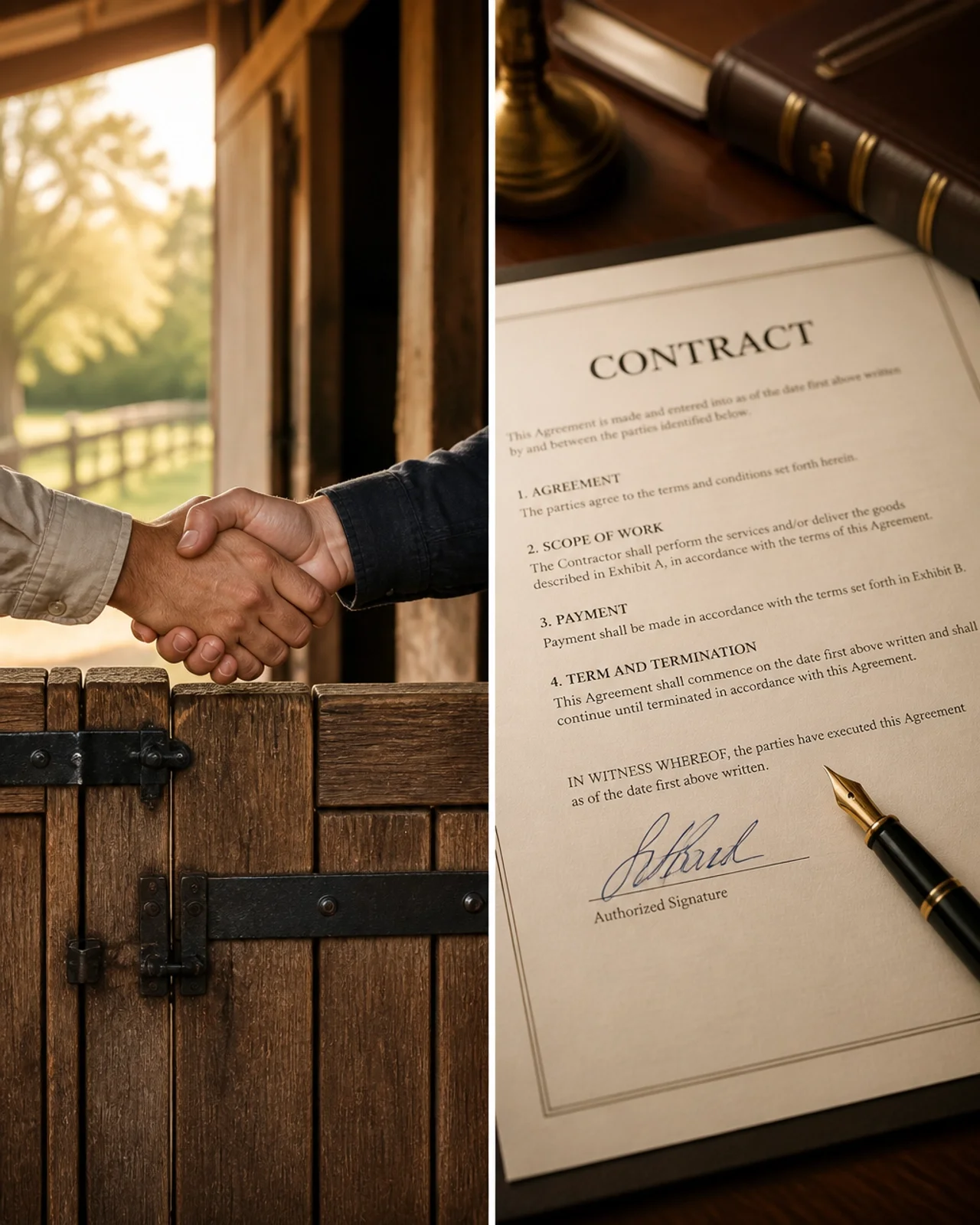
When these disputes hit the County Court: which they are doing at a record rate: judges have to try and piece together what happened from texts, emails, and "he said, she said" oral evidence. It’s messy, it’s expensive, and it rarely leaves anyone happy.
If you are operating on a verbal agreement, you are essentially driving without a seatbelt. It’s fine until you hit a bump: and with the current 18% spike in disputes, that bump is more likely than ever.
The Notice Period Problem
Perhaps the most common trigger for the current legal spike is the notice period.
In an ideal world, a horse owner gives a month’s notice, pays their final bill, and moves on to a new yard with no hard feelings. But when prices rise abruptly, many owners feel they should be able to leave immediately without paying for a month they didn't agree to at the new price. Conversely, yard owners who have empty stables need that notice period income to cover their fixed overheads.
Without a written contract specifying a 30-day notice period, things get ugly fast.
The "Midnight Flit": We see owners who pack up their horse and trailer in the middle of the night to avoid paying a notice period they don't believe they owe.
The "Locked Gate": We see yard owners who refuse to let a horse leave until a "debt" is paid: which can lead to serious legal complications regarding the "lien" on a horse.
Both of these scenarios could be avoided with a simple, clear clause in a preventative contract. Knowing exactly where you stand from day one isn't "being difficult": it's being professional.
What Happens in Court? (The 50-Week Wait)
If you think "I'll just take them to court and settle it," you might want to pack a very large lunch.
The same data that showed the 18% spike also highlighted a sobering fact: the average time for a small claim to reach a hearing is now nearly 50 weeks. That is almost a full year of stress, legal fees, and awkward encounters at shows or the local tack shop.
For a dispute over £1,500 of livery fees, spending a year in legal limbo is rarely worth it. This is why mediation and preventative advice are so much more valuable than a court date.
At The Horse Lawyer®, we focus on helping you avoid the courtroom altogether. Whether that’s by drafting a contract that leaves no room for interpretation or stepping in to mediate a dispute before it escalates, our goal is to keep you in the saddle and out of the witness box.
How to Protect Your Yard or Your Horse
Whether you’re the one providing the care or the one paying for it, there are steps you can take today to protect yourself from becoming part of next year's statistics.
For Yard Owners:
Audit Your Agreements: If you have 20 horses and 20 different "understandings" of what the service includes, you are at risk. Standardize your terms.
Formalize Price Hikes: Give reasonable notice (usually at least 30 days) and put it in writing. Explain why costs are rising: people are generally more understanding when they see the hay bill has doubled.
Get Professional Help: Don't just download a generic template from the internet. Every yard is different. A bespoke contract from a specialist like The Horse Lawyer® ensures your specific services and risks are covered.
For Horse Owners:
Ask for the Paperwork: If a yard doesn't offer a contract, ask for one. If they won't provide it, send a summary email of what you’ve agreed upon so there’s a digital paper trail.
Check the "Extra" Costs: Make sure you know what happens if the price of feed goes up. Is there a cap? How much notice will you get?
Know Your Notice Period: Don't assume it's a month. It might be a week, or it might be none. Get it in writing before you move your horse in.

We’re Here to Help
The equestrian world is small, and reputations are everything. A legal battle doesn't just cost money; it costs you your peace of mind and your standing in the community.
At The Horse Lawyer®, we speak your language. We understand the difference between "full livery" and "working livery," and we know exactly why a sudden 18% spike in disputes is happening. Whether you need a robust new contract to protect your business or you’re currently in the middle of a dispute that feels like it’s spiraling out of control, we are your guides at every step of the way.
Don't wait for the ticking time bomb to go off. Let’s get your agreements sorted so you can get back to what really matters: enjoying your time with our equine friends.
Ready to secure your stable's future? Contact us at The Horse Lawyer® today for expert advice tailored specifically to the equestrian industry.
**Disclaimer: This content is provided for general informational and educational purposes only and does not constitute legal advice. No solicitor-client relationship is formed by your use of this information. While I strive for accuracy, the law changes frequently; you should always consult a qualified legal professional regarding your specific circumstances. The Horse Lawyer® and its contributors accept no liability for actions taken based on this content.